About us

We are Imagineers.

What makes us unique is our ability to connect the dots between commerce, technology, design and growth. AI and digital technology have given every business more options than it can chase. We help you find the ones that will return the most, work out what your customers and your people really need, and design services and products they enjoy using. Then we build them with you. All in one studio, end to end.

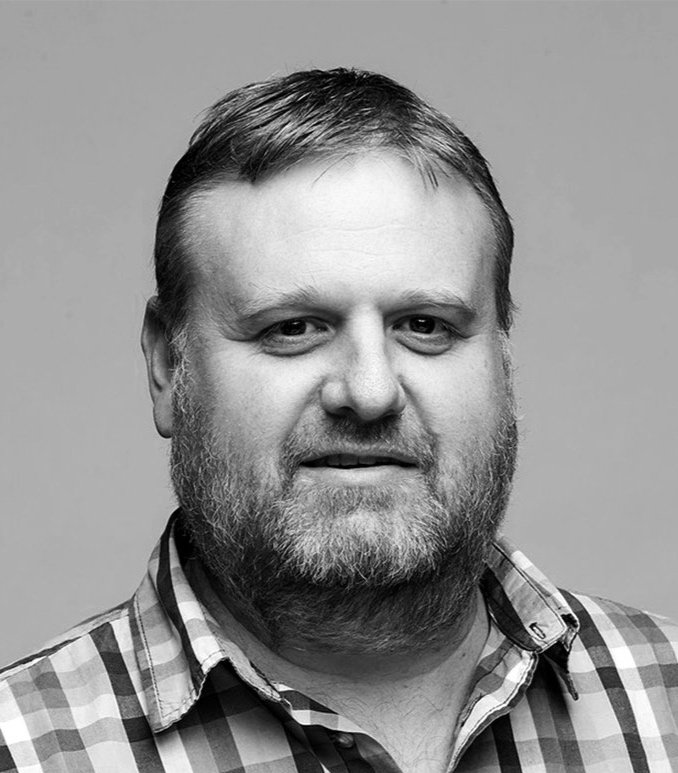
Matt Clayton
FOUNDER & MANAGING DIRECTOR · SYDNEY

Matt Clayton

Matt is an Imagineer and managing director who helps leaders and founders turn their ambitions into real-world results, from strategy to build to scale. Over 16 years he has advised organisations from startup to ASX-listed scale, invented new services, taken brands from an idea to award-winning businesses and held governance roles. He has founded companies in technology, advisory and creative services, and the firms he has led have added hundreds of millions of dollars in value for clients. He led Next Gen Marketing Technology and AI at Woolworths Group, Australia's largest retailer, after first working with the company as a consultant. Today he leads Imagineers in Australia.

Aaron Pollard
FOUNDER AND PARTNER · NEW PLYMOUTH

Aaron Pollard

Aaron is an Imagineer who works where science, AI and organisational change meet. He has over 25 years of experience in infrastructure, energy and technology around the world, in senior strategy and technology roles at Hewlett Packard, Powerco and Spark. He has led multi-million-dollar transformations, held governance roles and published work on intelligent systems. His focus is turning complex technology into practical business outcomes and organisational capability. Outside client work he helps community groups get young people into STEM and digital skills. Today he heads up Imagineers in New Zealand.

The right people for every engagement.

Around our founders is a team of independent senior talent from a network we know and trust, and a studio team ready to design and build, and manage transformation and change.

Strategists

AI and digital transformation strategy, business design and business cases.

Designers

Service design, customer experience design, product design, and UX and UI design.

Product Leads

What to build, who it's for, requirements, roadmaps and product governance.

Technologists

Apps, software, architecture, ecommerce, workflow automation and AI.

Researchers

Customer and market research, behavioural science and experimentation.

Managers

Programme and portfolio governance, and change management through rollout.

The Manifesto

INTRODUCTION

How are market defining brands, products and companies made?

The answer is threefold: imagination, engineering and entrepreneurship.

Imagination allows us to envision many futures, to dream and visualise in an informed way about how the world could be, and how to make it better.

Engineering enables possibility, allowing us to take ideas and make them tangible in the real world using science, technology, time and materials.

Entrepreneurship is the discipline of making the hard things happen, the passion, drive, and tenacity needed to build things and to persist in the face of adversity.

We call the combination of these Imagineering. It is what we do.

This manifesto contains seven of our principles for commercial innovation, developed through years of experience, failure and success in ventures small and large.

We hope you find these seven principles as powerful as we have.

Your business is an information system.

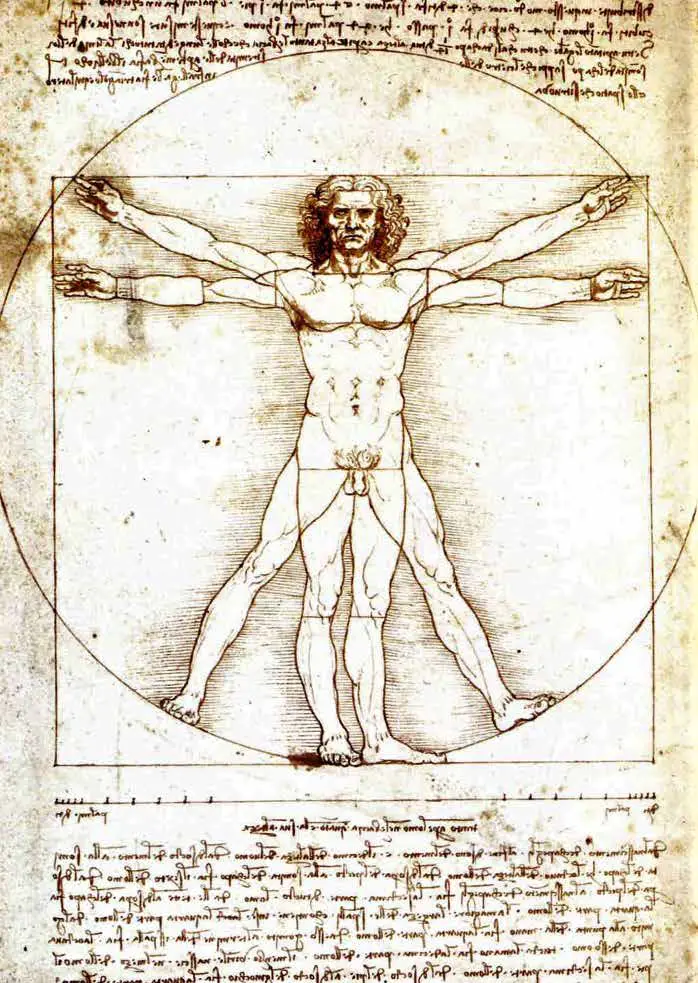
Physics has shown us the universe is not constructed merely from matter, but from the information. Put simply, the science goes, "What defines things is their capacity for communicating or exchanging information with other things." In nature, the processing, storing, and communication of information is what enables life to emerge.

In the same way as the universe is a collection of particles and information, your organisation is a collection of people, materials and information. Modern, effective companies incarnate this truth and build highly portable, understandable, and meaningful information throughout their business model.

At first viewing your business as a holistic entity might sound esoteric, but think about it... it is precisely what it is. What parts are not an arrangement of information, materials and people?

Like the science shows, systems thinking is fundamental to commercial success.
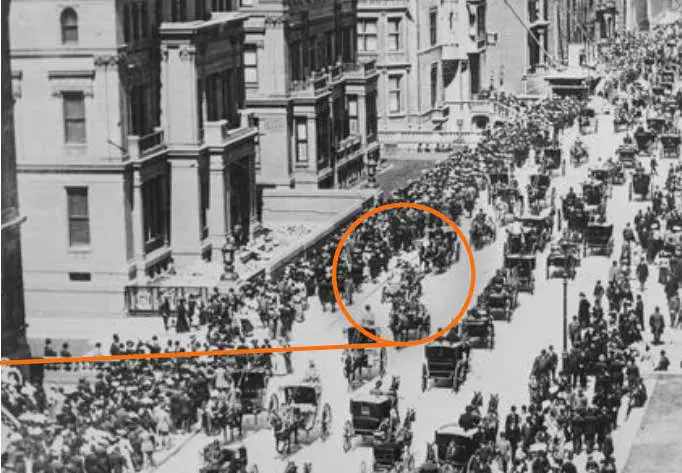
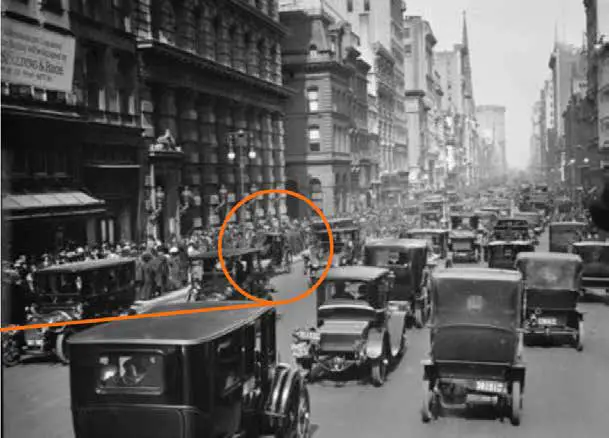
5TH AVENUE, NYC, 1900. WHERE IS THE CAR?
5TH AVENUE, NYC, 1913. WHERE IS THE HORSE?

Natural selection is a force you can harness to win.

Evolution shows us survival of the fittest isn't about being the biggest, fastest, or strongest. It is about the ability to "fit" with change. Those that don't adapt will disappear. Maybe slowly, maybe quickly, but inevitably.

Most companies run on linear plans that factor in one future. It is this linear thinking that leads to companies suffering change, not harnessing it. The truth is that there is no one future. The future is unknowable. There are in fact many futures at this point in time: some probable, some plausible, some possible and all but a few preferred.

What's true for all of these futures is that the ability to adapt is essential to survival. It is true in nature, and it is especially true in business. How many household name brands no longer exist? Strong strategic design is coherent with the laws of physics and the natural world. It builds future resilience through a strong culture of continuous learning and adaptation.

Environmental, societal, technological and economic change are inevitable. The only question is: are you ready?

Knowledge is power, no matter the intelligence.

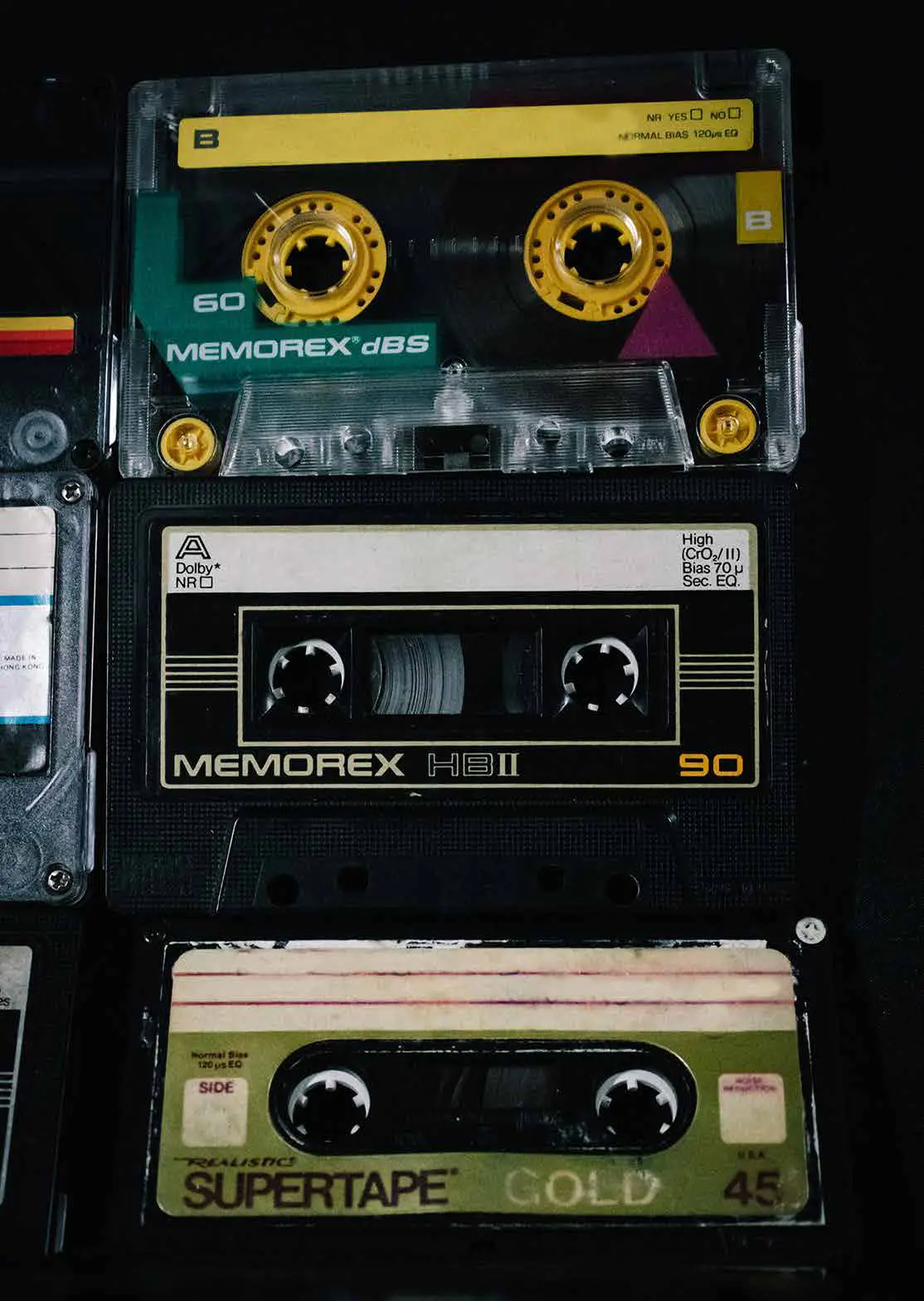
Most businesses are composed of tacit knowledge, which is the knowledge that hasn't been captured or organised, except inside people's minds. Tacit knowledge is only useful if the person who holds it is present. If they leave or are absent, they take what they know with them. Goodbye.

How often do things break down because of a lack of knowledge? How much waste is created simply by people not knowing? In a world polarised by artificial intelligence, one thing remains true. Regardless of whether it is human or machine intelligence, what matters is what we know and how we share it.

Explicit knowledge is when information has been organised, codified, and can be used for a specific purpose. This allows for the creation of super-effective people and machines who share an understanding of the world. Companies that focus on how they organise, code and share knowledge massively outperform those that don't. To truly harness AI, organise knowledge.

Now you know.

Connect the birds-eye view to the view on the ground.

Not so long ago if you went anywhere new you'd use a physical map to find your way around (or ask for help when you got lost). Today, you use Maps on your phone. One is a two-dimensional point-in-time static representation, while the other is a live three-dimensional information experience.

Satellites work by communicating information as radio waves between the ground and sky. This is also a great metaphor for effective strategic design. As a leader, you will get far more insight by engaging directly with your customers or staff on the ground than by reading any internal static management report. They are the people who hold the key to understanding what's really going on.

Every company needs ways to view, transmit, receive, and translate information between the birds-eye view (boards, executive teams) to the view on the ground (customers, frontline staff) with utmost clarity. You can't change the world from an ivory tower. Equally, you can't see the big picture from the ground.

Do both well.

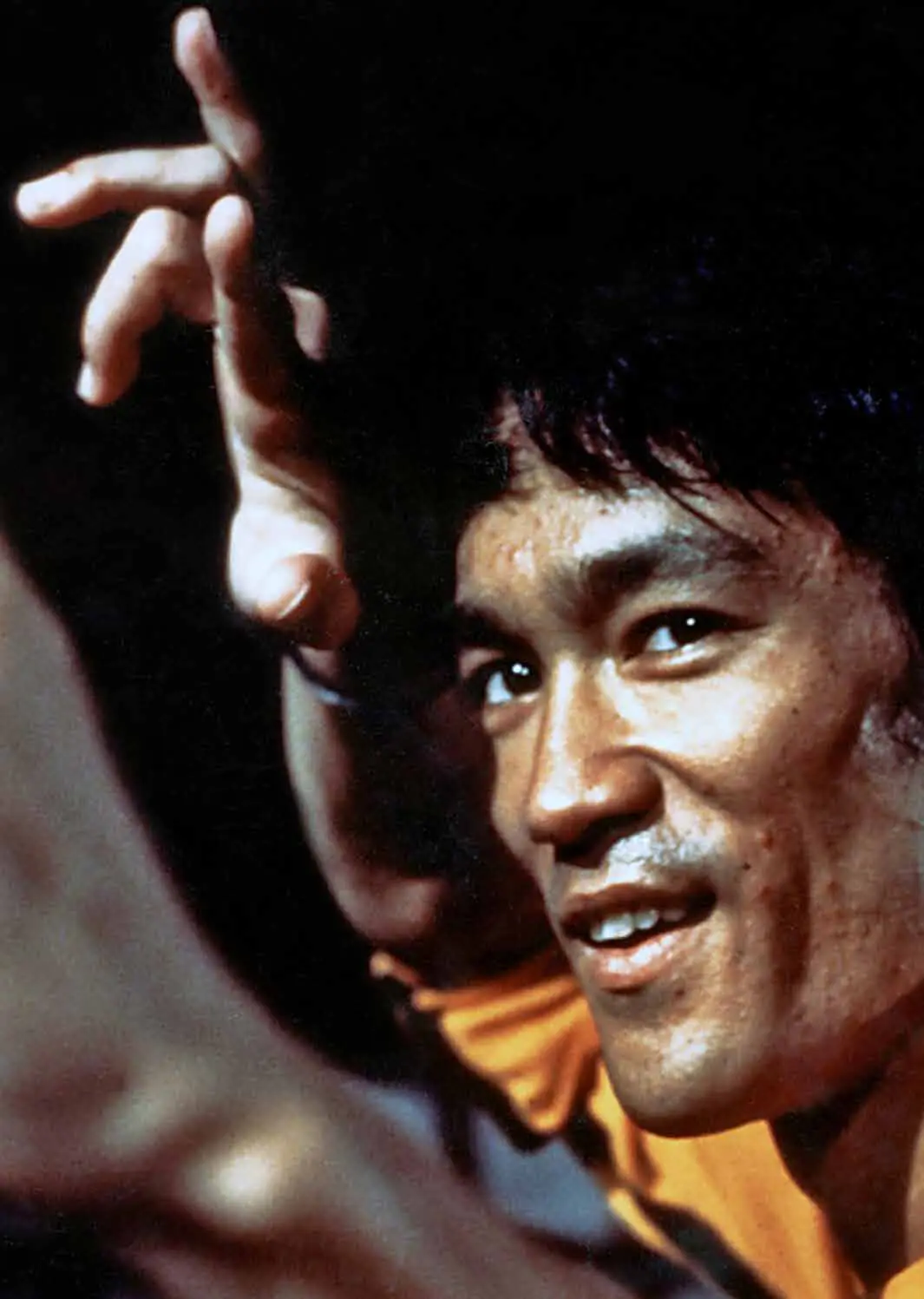
Be water, my friend.

It is a mistake to think that technology is the focus of digital and business transformation. Transformation is about people. People need reasons to change. They need to buy in, to want to change. How many times have you thrown a new system into the mix, only for no-one to use it? What was the point?

Transformation is a kind of innovation, where new things are adopted and implemented effectively, and at speed. It works best when it is focused, disciplined, continuous, and wide-reaching (not done in silos).

Because transformation is a human process, it is a choice. This fact tells us then that what we really need to focus on is building a culture and environment where people are open to change. Culture is how we exist in the world. It is a shared set of values and behaviours. It is what unites us in thought and action.

When Bruce Lee gave his immortal quote, he was talking about being open minded. We are, too.

Exponential organisations and the 10x claim.

In their book Exponential Organisations, Ismail, Malone and van Geest argue that companies designed to be exponential make an impact or output at least 10x larger than their peers, and explain how these businesses use information technology to transform what was once physical into digital, on-demand products and services.

"The driver fuelling this phenomenon is information. Once any domain, discipline, technology, or industry becomes information-enabled and powered by information flows, its price and performance begin doubling approximately annually. Once that doubling pattern starts, it doesn't stop."

So, how do you turn your legacy business into an exponential one? Firstly, you can't achieve exponential if you cannot scale elements of your business exponentially at low to zero cost. If your company isn't enabled by data and technology, it is not possible. The factors that separate exponential from legacy companies aren't just technical. Hyper-scalers embrace innovation, leverage staff and assets on demand, and foster collaboration.

As the saying goes, "The whole is greater than the sum of its parts." In modern strategic design, the book argues, it is 10x greater.

Make a remix.

Innovation can be as simple as arranging things differently. Remixes are a form of innovation. They take things that came before and they build on them, often in unique and interesting ways, evolving the original material in meaningful ways.

At Imagineers we've remixed the agency model into a studio of senior leaders, designers and technologists, and designed our business to be all the things we promote in this manifesto. The closest comparative organisational model is probably modern special operations forces: small teams of highly motivated people, each chosen specifically for their skillset on task, laser focussed on achieving the mission.

Flat hierarchies and collaboration with a diverse range of leaders eliminate groupthink, echo chambers, and myopia from traditional business strategy, and result in organisations explicitly designed for exponential outcomes. Our philosophy is: "We don't consult. We unite." We don't need to tell you the future is coming (but it is). You've got two choices in facing it: react as it happens to you, or Imagineer it to your advantage.

Welcome to the remix.